B
M
T
T
U
R
K
E
Y


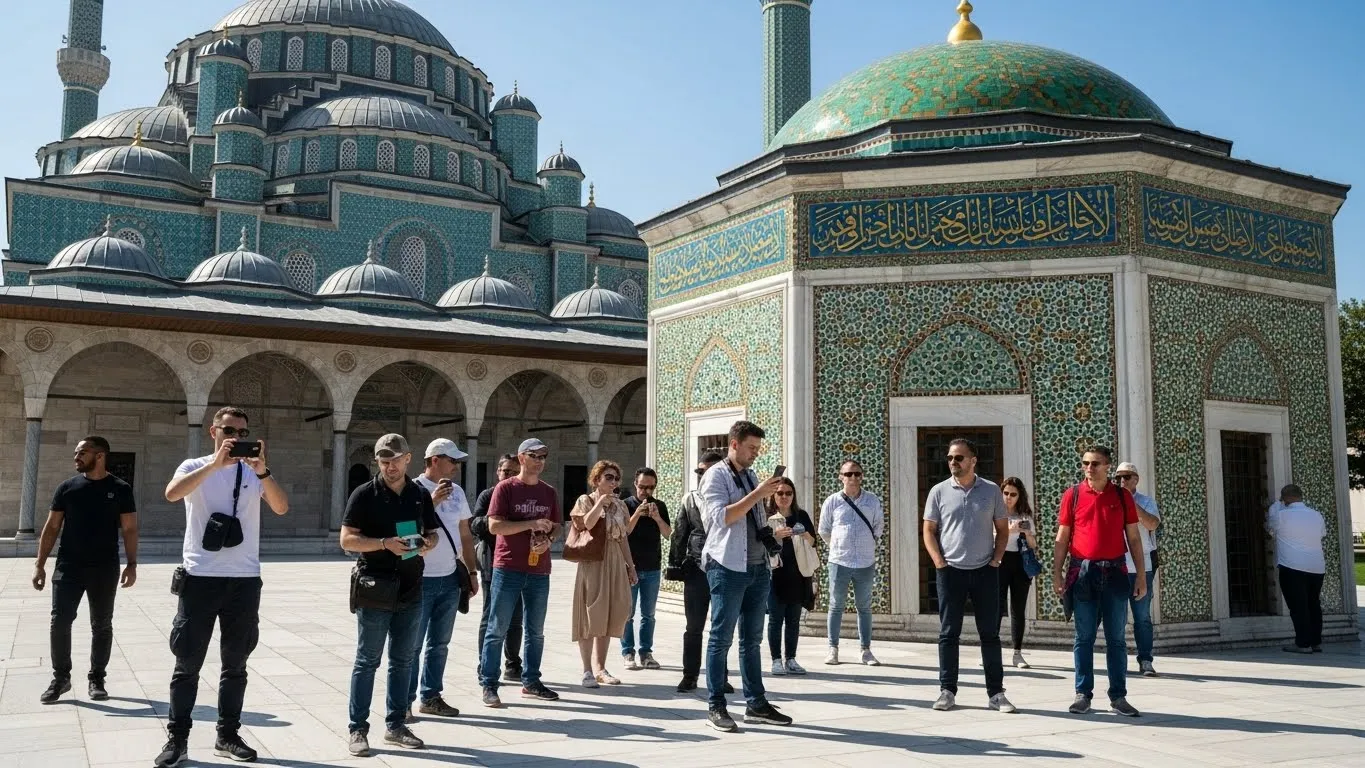
To understand the immense cultural and historical depth of Turkey, one must trace the footsteps of the Ottoman Empire, beginning with its foundation and concluding at its dazzling imperial peak. This journey is perfectly encapsulated by the two iconic cities that served as its capitals: Bursa and Istanbul. The Ottoman Charm: Istanbul & Bursa Heritage | Bmt Turkey offers a unique travel narrative, linking the serene, foundational mosques nestled at the foot of Mount Uludağ with the monumental, world-dominating architecture of the Bosphorus. Traveling between these two cities is not just sightseeing; it is moving through time, witnessing the evolution of an empire from its modest, pious beginnings to its grand, global zenith. Bursa, the first capital, provides a quiet, intimate connection to the early sultans and the genesis of Ottoman culture, marked by its sublime tile work and its vital role as a silk trade hub. Istanbul, the glorious conquest, bombards the senses with its monumental scale, where the Topkapı Palace and Süleymaniye Mosque stand as eternal symbols of power and artistry. For the discerning traveler seeking depth and authenticity, Bmt Turkey curates this historical passage, ensuring every step of the journey is rich with context, exclusive access, and luxurious comfort. They transform the simple act of visiting historical sites into a personalized dual-city pilgrimage. This article will guide you through the distinct heritage of both Bursa and Istanbul, explaining how this dual legacy defined the empire. We will then detail specific, highly tailored travel experiences that allow you to fully immerse yourself in the authentic Ottoman Charm: Istanbul & Bursa Heritage | Bmt Turkey today.
Bursa, captured in 1326, served as the primary capital during the Ottoman Empire’s vital formative years. This period was crucial for developing the administrative, military, and artistic identity that would later fuel its monumental expansion. The city’s heritage is one of spiritual piety and architectural experimentation. Unlike the later imperial constructions of Istanbul, Bursa’s monuments are characterized by a more human scale and an intense focus on Külliyes (social complexes) that housed mosques, hospitals, schools, and bathhouses, reflecting the sultans' commitment to public welfare. The first six Ottoman Sultans and their families are interred here, making the city a sacred repository of the empire's origins.
Bursa introduced the world to the unique early Ottoman architectural style, characterized by its innovative use of space and color. The Green Mosque (Yeşil Cami) and the adjacent Green Mausoleum (Yeşil Türbe) are essential stops. They showcase some of the earliest and finest examples of Ottoman tile work, featuring deep blues and turquoise greens, which give the structures their iconic name. Furthermore, the Ulu Cami (Grand Mosque), with its vast twenty-domed hall, provides a stark contrast to later imperial designs, reflecting the initial, decentralized nature of the early state. This unique architectural language is a testament to the early ambition of the Ottoman Charm: Istanbul & Bursa Heritage | Bmt Turkey. Experiencing these sites allows travelers to see the raw, potent energy that launched a world empire.
Bursa’s spiritual and political importance was firmly underpinned by its economic dominance, specifically as a central terminal for the global Silk Road. The city was the key processing and distribution point for the silk thread and cocoons that arrived from Persia and the East before being shipped to Europe. This commercial history is still vibrantly alive at the Koza Han (Silk Cocoon Inn), located near the Ulu Cami.
Built in 1491, the Koza Han remains an operational marketplace today, unlike many static historical sites. Its magnificent courtyard, lined with two stories of merchant rooms (now shops), is the perfect place to appreciate the continuity of commerce. Here, travelers can still acquire high-quality Bursa silk products, surrounded by the same walls that housed merchants and their precious cargo centuries ago. The experience highlights how the Ottoman Charm: Istanbul & Bursa Heritage | Bmt Turkey is not confined to museums but is a living, breathing component of modern Turkish life. The serene atmosphere, combined with the historical depth, makes Bursa an indispensable starting point for this dual-city exploration.
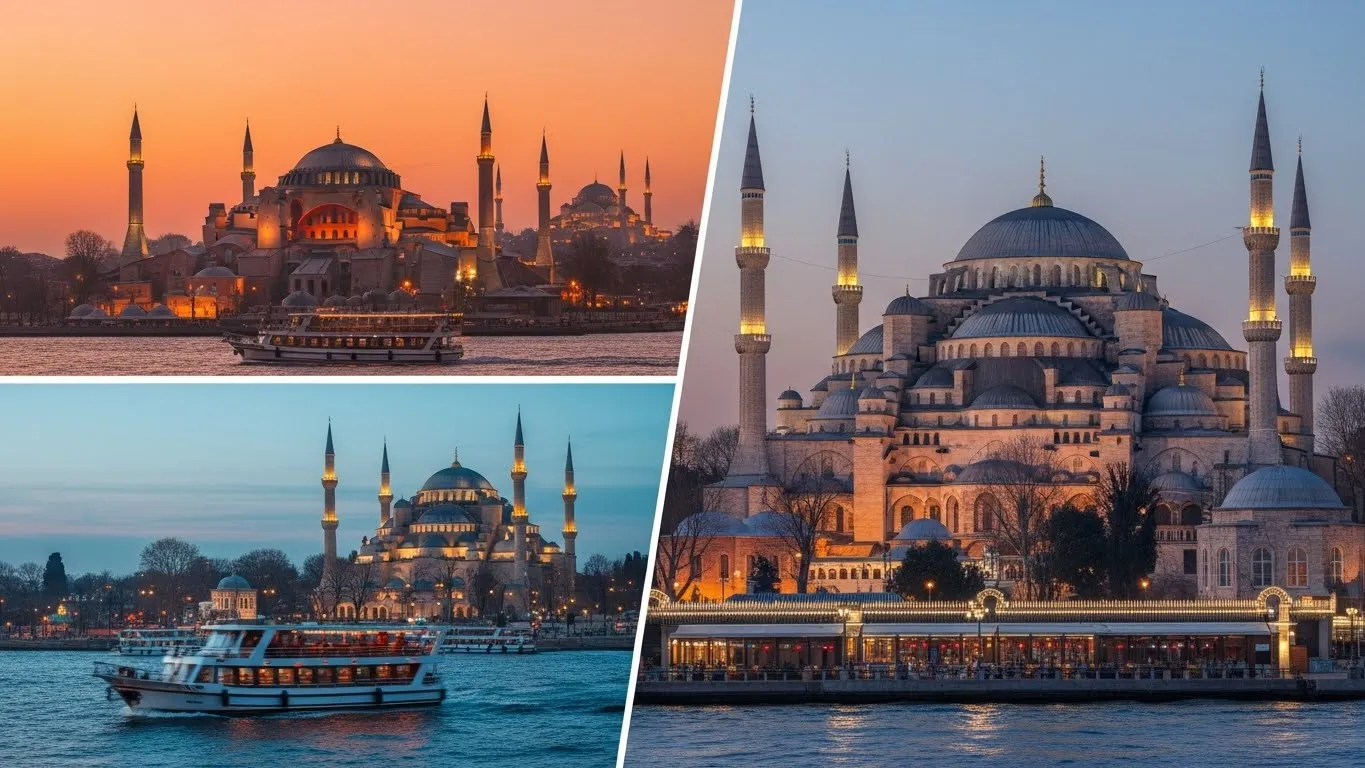
The conquest of Constantinople in 1453 marked the dramatic shift from the foundational era of Bursa to the imperial zenith of Istanbul. Rechristened as the capital, the city was immediately transformed into the seat of a multi-continental empire and the center of the Islamic Caliphate. The architecture and city planning here were scaled to match its new status as a global metropolis, intended to awe and project undisputed power. The historical peninsula, framed by the Golden Horn and the Bosphorus, became the stage for monumental construction.
Istanbul is home to the masterpieces of Mimar Sinan, the empire's Chief Imperial Architect. His work, particularly the Süleymaniye Mosque, stands as the pinnacle of classical Ottoman architecture, characterized by its immense, soaring dome, perfect geometric symmetry, and the unified Külliye system. These structures were specifically designed to visually and architecturally rival the ancient Hagia Sophia, showcasing the confidence and mastery of the Ottoman state. The experience of walking through the courtyard of a mosque like the Süleymaniye is one of pure architectural majesty, a direct statement of the empire’s power.
The imperial life and global trade converged in Istanbul. The Topkapı Palace served as the nerve center of the empire for nearly four centuries, encompassing the state administration, the Treasury, and the secluded life of the Sultans and their families. Visiting the palace is a journey through the inner workings of an empire, from the solemn Divan (Council) chambers to the lavish Harem.
Istanbul’s commercial districts are the direct descendants of the Silk Road’s European terminal. The Grand Bazaar (Kapalıçarşı), one of the world's oldest and largest covered markets, and the adjacent Spice Bazaar (Mısır Çarşısı) are where goods from every corner of the known world were traded. Exploring these labyrinths offers a sensory explosion, showcasing the cosmopolitan nature of the Ottoman capital. This fusion of power, wealth, and culture defines the Ottoman Charm: Istanbul & Bursa Heritage | Bmt Turkey, presenting an empire at its ultimate peak of global influence and sophisticated artistry.
This journey is meticulously designed for those seeking a quiet, profound connection to the origins of the Ottoman dynasty. It focuses on the most sacred and historical sites in Bursa, offering a level of access and contextualization unavailable to general visitors. The tour utilizes the calm atmosphere of Bursa to deliver an emotionally resonant historical immersion.
Bmt Turkey curates a day beginning with a private, guided visit to the Tombs of Osman Gazi and Orhan Gazi (the empire's founders), located in the Tophane district, offering a panoramic view of the city they conquered. The quiet setting allows for reflection on the enormous historical significance of their lives. This is followed by an in-depth, scholarly tour of the Ulu Cami and the Green Complex (Yeşil Külliye).
The true luxury lies in the quality of the guidance: a dedicated Ottoman historian accompanies the group, explaining the nuances of the early Külliye system and the political motivations behind the architecture. This level of historical access and personal attention transforms the appreciation of the Ottoman Charm: Istanbul & Bursa Heritage | Bmt Turkey from a visual experience into a deep intellectual encounter, making the foundational city’s role tangible and immediate.
The Bosphorus is the defining feature of Istanbul’s imperial era, hosting summer palaces, defensive fortresses, and the opulent private residences known as Yalıs (seaside mansions). This experience focuses on the grand lifestyle of the imperial elite during the empire’s peak.
The day is built around a private cruise along the Bosphorus, narrated by an expert on Ottoman social history and architecture. This allows travelers to view the famous Yalıs—many of which are still privately owned and inaccessible by land—while hearing the stories of the Pashas, ministers, and wealthy merchants who once occupied them.
The journey includes a dedicated, private visit to a non-central Imperial structure, such as the Beylerbeyi Palace or Küçüksu Pavilion, which served as summer retreats or hunting lodges. Bmt Turkey arranges specialized access, allowing travelers to explore these more intimate royal spaces away from the crowds of the main Topkapı complex. This provides a layered understanding of the Ottoman Charm: Istanbul & Bursa Heritage | Bmt Turkey, highlighting both the high politics of the court and the sophisticated leisure culture enjoyed by the imperial family along Istanbul’s iconic strait.
This journey focuses on the commercial and culinary heart of both Bursa and Istanbul, demonstrating how trade routes fundamentally shaped the regional cuisine and craft traditions that define Turkish culture today. It is a sensory immersion rooted in the Ottoman economy.
The experience begins in Bursa with a morning spent at the Koza Han, focusing on silk and textiles. This is paired with a visit to a historical workshop district (Han), where artisans continue to practice copper-smithing or woodworking, crafts vital to the historical trade economy.
In Istanbul, the focus shifts to gastronomy. Travelers receive a private tour of the Spice Bazaar (Mısır Çarşısı) led by a food anthropologist, detailing the origins and use of the spices imported via Egypt and the Silk Road. This is followed by a traditional Ottoman cooking class, where participants learn to prepare classic dishes, such as Hünkar Beğendi (Sultan's Delight), reflecting the luxurious court cuisine. Bmt Turkey ensures that this exploration of the Ottoman Charm: Istanbul & Bursa Heritage | Bmt Turkey is not only delicious but also academically grounded in the historical flow of goods and ingredients.
Beyond mosques and palaces, the Hamam (Turkish Bath) was a crucial component of Ottoman social and hygienic life, integrated into every Külliye. This experience allows travelers to immerse themselves in this enduring wellness tradition, showcasing the practical side of the Ottoman Charm: Istanbul & Bursa Heritage | Bmt Turkey.
Bmt Turkey curates a visit to one of Istanbul's (or Bursa's) finest historical hamams, ideally a Çifte Hamam (double bath) designed by Mimar Sinan or one of his disciples, ensuring architectural authenticity. The experience includes:
Guided Hamam History: A brief explanation of the hamam’s social role—as a place for ritual cleansing, celebrations, and gossip—before the physical experience begins.
Traditional Rituals: A full, traditional Turkish bath treatment, including tellak (attendant) services, kese (exfoliation), and foam massage, conducted within the magnificent marble halls under the star-like dome lighting.
This wellness experience provides a physical and mental connection to the historical life of the Ottoman citizen. The beauty of the marble, the warmth of the camekan (dressing room), and the deeply relaxing ritual offer a palpable sense of the tranquility and sophisticated public life that was central to the Ottoman Charm: Istanbul & Bursa Heritage | Bmt Turkey Modelleri.
The geographical link between Bursa and Istanbul, separated by the Sea of Marmara, required sophisticated transport in the Ottoman era and continues to demand efficient logistics today. Bmt Turkey leverages modern solutions, such as the efficient ferry systems and high-speed highways, to seamlessly connect the foundational sites of Bursa with the imperial centers of Istanbul. This logistical mastery ensures that the transition between the spiritual and imperial capitals is smooth and maximizes the traveler’s time. The appreciation of the Ottoman Charm: Istanbul & Bursa Heritage | Bmt Turkey is enhanced by this seamless connectivity.
A core challenge in heritage travel is balancing exclusivity with authenticity. Bmt Turkey tackles this by focusing on heritage consulting—employing historian-guides, selecting locally-owned businesses, and prioritizing stays in boutique hotels housed in restored Ottoman-era mansions rather than international chains. This commitment ensures that the traveler's financial contribution supports the local ecosystem dedicated to preserving the very charm they have come to experience. This commitment to sustainable, authentic tourism aligns perfectly with the historical integrity of the sites.
The most visually stunning contribution of the Ottoman Empire to global art is the Iznik Tile. These ceramics, characterized by their brilliant reds, blues, and greens, decorate the interiors of imperial mosques and palaces across both Istanbul and Bursa. The tile works are a direct cultural legacy, and no trip is complete without understanding the complex production process. The Ottoman Charm: Istanbul & Bursa Heritage | Bmt Turkey offers private viewings of master tilework and, for interested patrons, tours to the Iznik region itself to witness the modern continuation of this ancient ceramic art.
The Külliye, or social complex, was central to Ottoman urban planning. It showed that the empire was built on more than just military might; it was built on a sophisticated welfare state. Every Külliye (e.g., Süleymaniye or Green Complex) integrated the mosque with a medrese (school), a darüşşifa (hospital), an imaret (soup kitchen), and a hamam (bathhouse). Understanding this holistic community planning is essential to appreciating the depth of the Ottoman Charm: Istanbul & Bursa Heritage | Bmt Turkey. The seamless integration of these functions speaks volumes about the empire’s priorities.
The Ottoman Charm: Istanbul & Bursa Heritage | Bmt Turkey offers an unparalleled opportunity to explore the historical continuum of a world empire. By linking the spiritual roots of Bursa with the imperial majesty of Istanbul, this dual-city pilgrimage provides deep cultural and historical context. Through expert guidance, exclusive access, and authentic experiences—from historical hamam rituals to culinary journeys through ancient bazaars—Bmt Turkey transforms history into a living, luxurious reality. This immersive journey confirms that the Ottoman legacy is not merely preserved but actively thriving, offering the sophisticated traveler an unforgettable, richly layered understanding of Turkish culture and history.

 English