B
M
T
T
U
R
K
E
Y


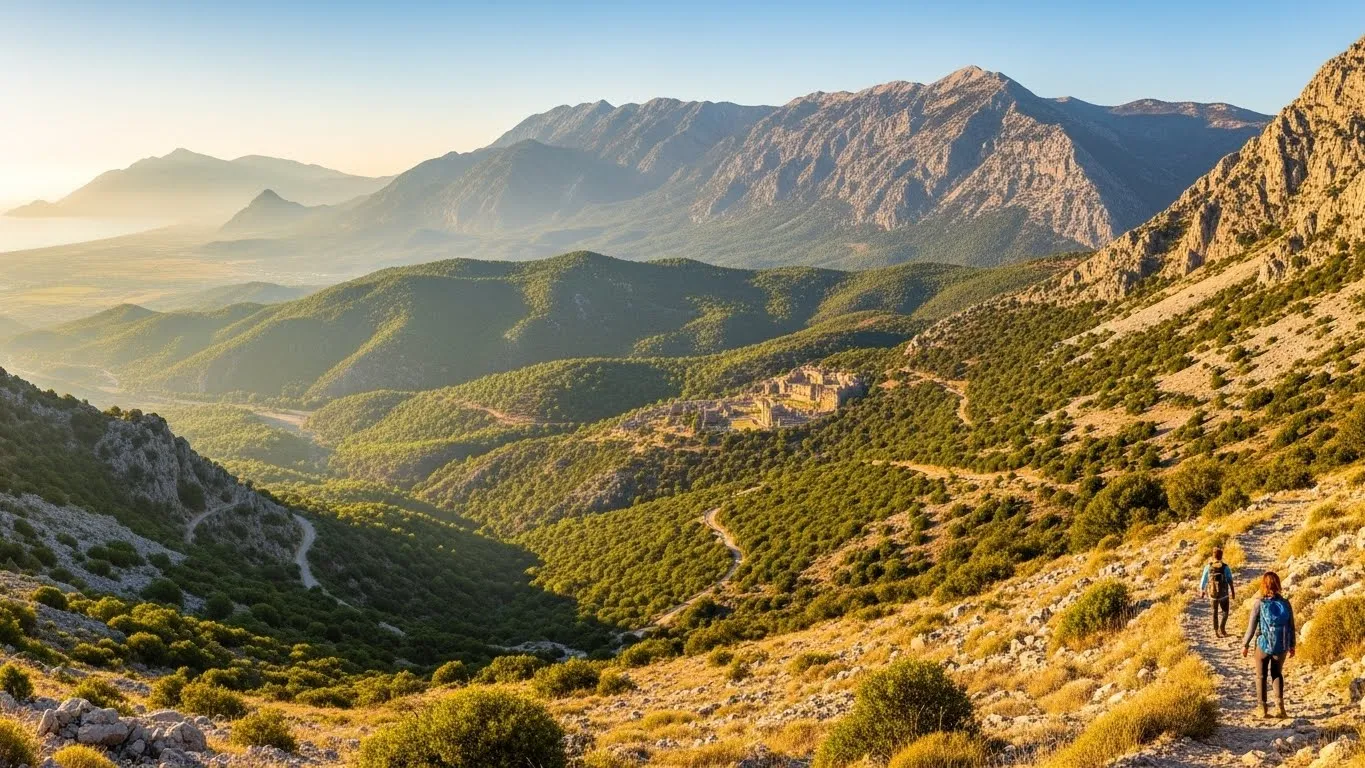
Welcome to the definitive guide to one of the world's most evocative pilgrimage paths. At Bmt Travel, we specialize in bridging the gap between ancient history and modern comfort, providing expertly curated Bmt Travel Saint Paul Route tours that offer more than just a hike—they offer a transformative spiritual experience. Whether you are a history enthusiast, a dedicated hiker, or a pilgrim seeking deeper meaning, our professional guidance ensures a safe, enlightening, and restorative journey through the rugged heart of the Taurus Mountains.
The Saint Paul Route is the second-longest trekking path in Turkey, tracing the historical footsteps of Saint Paul during his first missionary journey from Perge to Pisidian Antioch. Historically, this route represents the spread of Christianity across the Roman Empire, as Paul traversed the challenging terrains of Anatolia to share his message. Today, it stands as a testament to human endurance and spiritual conviction, connecting the coastal plains of Antalya to the high plateaus of the interior.
Saint Paul, originally Saul of Tarsus, is perhaps the most influential figure in the early spread of the Christian faith. His journey through the Taurus Mountains was not merely a physical traverse; it was a mission that changed the course of Western civilization. When you travel with Bmt Travel, you aren't just walking on stones; you are walking on the very foundation of historical transformation.
The First Journey: Around 46-48 AD, Paul, accompanied by Barnabas and Mark, landed at Perge.
Challenges Faced: The trio faced bandits, malaria-infested swamps, and the grueling ascent of the "Climax" (the Taurus passes).
Cultural Impact: The route facilitated the meeting of Greco-Roman culture with early Christian ideology.
In a world that moves at lightning speed, the Saint Paul Route offers a rare opportunity for "slow travel." It is a corridor where time seems to have stood still. Bmt Travel emphasizes the E-E-A-T (Experience, Expertise, Authoritativeness, and Trustworthiness) principles by employing guides who are not only experts in the terrain but also scholars of the local history and biblical significance.
Trekking the Saint Paul Route typically takes 14 to 30 days depending on the chosen pace, covering approximately 500 kilometers of diverse terrain ranging from sea-level plains to high mountain passes reaching 2,200 meters. Hikers can expect a mix of Roman roads, medieval footpaths, forest trails, and occasional asphalt, all framed by the stunning backdrop of the Taurus Mountains, deep canyons, and turquoise lakes.
The path is notoriously more rugged and wild than its counterpart, the Lycian Way. Bmt Travel provides detailed briefings to ensure every traveler is physically and mentally prepared for the following:
The Coastal Start: Beginning in the lush, humid plains near Perge and Aspendos.
The Ascent: Steep climbs through cedar and pine forests where the air turns crisp and thin.
The High Plateaus: Expansive meadows (yaylas) where nomadic traditions still thrive.
Canyon Crossings: Navigating the dramatic walls of the Köprülü Canyon.
The scenery is a kaleidoscopic shift of Turkish landscapes. You will witness the transition from the Mediterranean "Maquis" shrubland to the alpine beauty of Mount Davraz.
Spring (April-June): Orchids bloom, and the weather is temperate, though some high passes may still have snow.
Autumn (September-November): The best time for clear skies and manageable temperatures, perfect for long trekking days.
While the full 500km is a feat for seasoned hikers, Bmt Travel offers modular tours. We can customize a 7-day "Highlights" tour focusing on the most scenic sections, or a full 25-day deep dive for those seeking the ultimate pilgrimage experience.
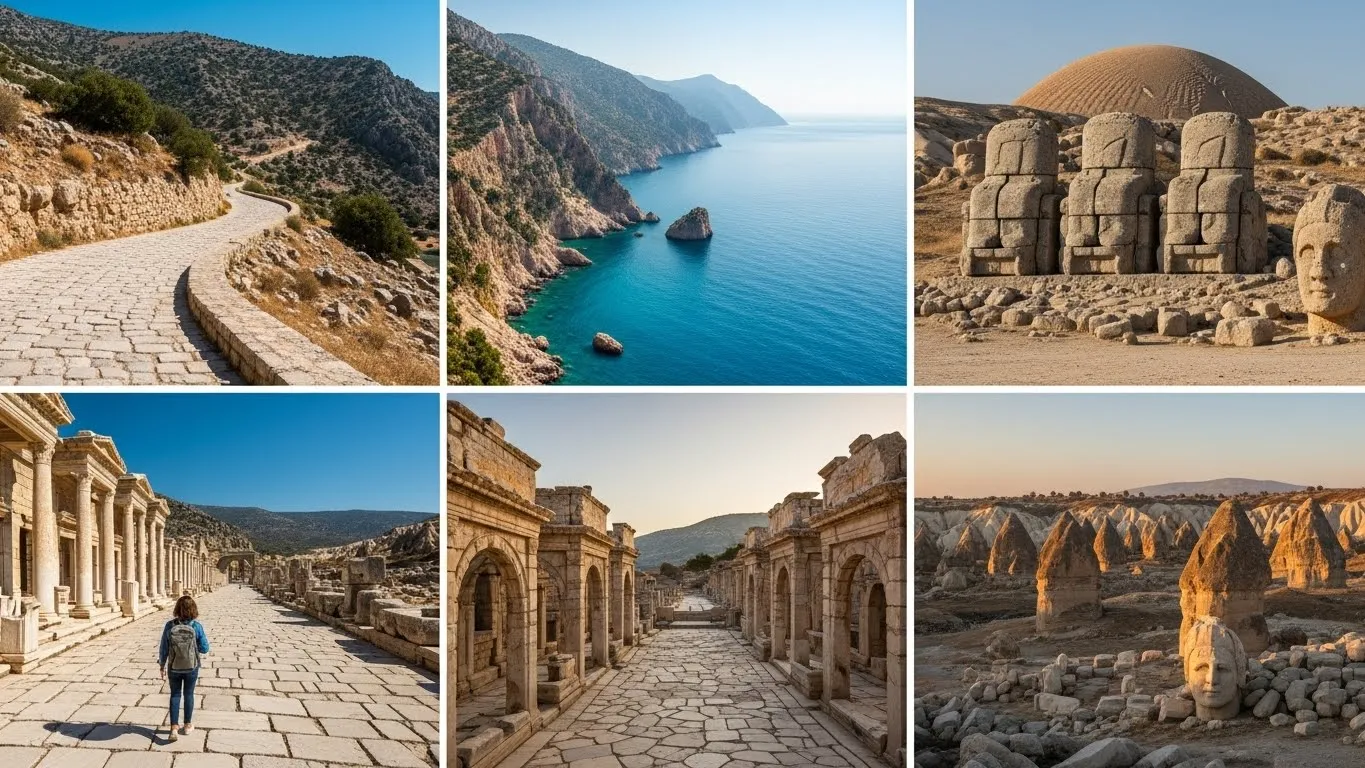
The Saint Paul Route is anchored by several major archaeological sites, most notably Perge, Aspendos, Sagalassos, and Pisidian Antioch, which served as critical hubs for Paul’s preaching and early Christian community building. These ancient cities provide a tangible link to the past, featuring remarkably preserved theaters, Roman baths, and the ruins of the very synagogues where Paul spoke.
Perge was a sophisticated Roman city and the starting point for Paul’s inland trek. Walking down its colonnaded street, you can still see the ruts made by chariot wheels. Bmt Travel ensures that our guests understand the urban planning and social structure that Paul encountered here.
While Paul’s visit here is less documented than Perge, the sheer majesty of Aspendos is unavoidable. Its theater, still used today, represents the architectural pinnacle of the era. It serves as a reminder of the Roman power that both protected and persecuted the early Christians.
Perched high in the mountains, Sagalassos is one of the most breathtaking sites in Turkey. The Antonine Fountain, still flowing with ancient spring water, offers a moment of reflection. For the pilgrim, it symbolizes the "living water" often referenced in biblical texts.
This is the spiritual climax of the route. It was here, in the synagogue of Antioch, that Paul gave his first recorded sermon. The ruins of the Great Basilica (St. Paul's Church) built over the site of the synagogue are a must-see for anyone on a spiritual quest.
Key Site: The Roman Aqueduct.
Key Site: The Temple of Augustus.
Key Site: The Byzantine Church foundations.
Successful preparation for the Saint Paul Route requires a "layering" strategy for clothing to handle temperature shifts, high-quality broken-in trekking boots, and a reliable GPS or professional guide due to the trail’s complex marking. Because the route is remote and occasionally lacks clear signage, Bmt Travel strongly recommends a combination of physical preparation and high-tech gear to ensure safety and comfort.
Do not attempt this route in new boots. We recommend:
Sturdy Trekking Boots: With high ankle support for the rocky limestone paths.
Moisture-wicking Socks: To prevent blisters during long descents.
Since you will transition from humid coasts to chilly mountain peaks, versatility is key:
Base Layers: Synthetic or merino wool to keep sweat away from the skin.
Insulation: A lightweight down jacket or heavy fleece for evenings at high altitudes.
Outer Shell: A breathable, waterproof jacket (Gore-Tex or similar) for unexpected mountain rain.
While the route is marked with red and white stripes, they can be faded or missing in remote areas.
GPS Devices/Apps: Ensure you have offline maps downloaded.
Bmt Travel Support: Our guided tours include satellite communication and support vehicles to carry heavy luggage, allowing you to walk with only a daypack.
Hydration: At least 3 liters of water capacity (bladder or bottles), as water sources can be scarce in the limestone sections.
For many, this is more than a hike. We suggest bringing a small journal, a lightweight camera, and perhaps a copy of the "Acts of the Apostles" to read the historical accounts as you reach each location.
At Bmt Travel, our mission is to provide an unmatched travel experience that honors the historical weight of the Saint Paul Route while prioritizing your personal comfort and safety. We understand that a pilgrimage is a deeply personal endeavor. Our local expertise, commitment to sustainable tourism, and passion for Anatolian history make us the ideal partner for your journey.
Join us on the Saint Paul Route, and let the stones of history tell you their story. Whether you are looking for a challenging trek or a quiet walk through the echoes of the past, we are here to guide your way.
1. Is the Saint Paul Route safe for solo hikers?
While many hike it solo, the route is remote and can be confusing. Bmt Travel recommends group tours or hiring a local guide to navigate the more isolated mountain sections safely.
2. What is the best time of year to visit?
The ideal windows are April to June and September to November. Mid-summer is too hot for the lower sections, and winter brings heavy snow to the Taurus passes.
3. Do I need a visa to travel to Turkey?
Visa requirements vary by country. Most travelers can easily obtain an e-Visa online. Please consult our Bmt Travel support team for specific guidance based on your nationality.
4. How difficult is the terrain compared to the Lycian Way?
The Saint Paul Route is generally considered more difficult. It involves more significant elevation gains and the paths are often less clearly defined, requiring better physical fitness and navigation skills.
5. What kind of accommodation is available?
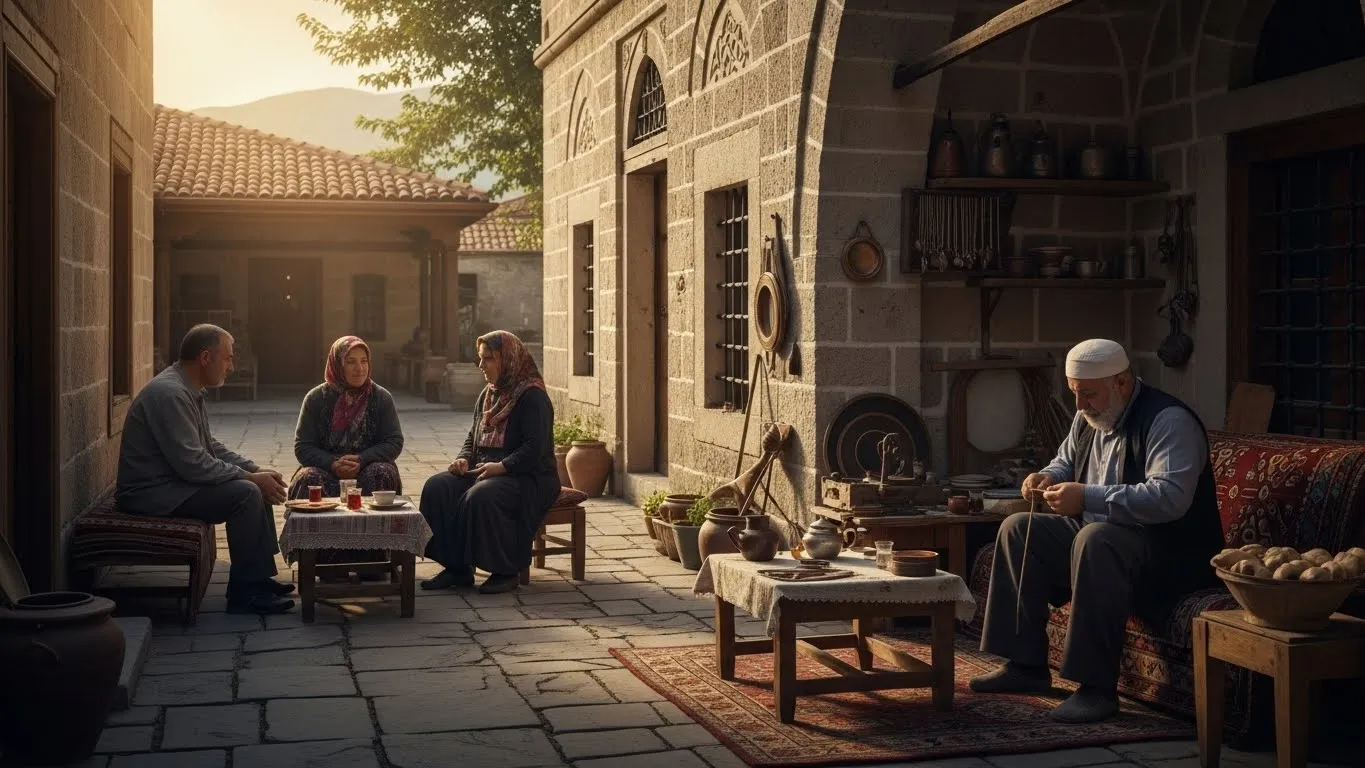
Accommodation ranges from village houses and small pensions to camping. On a Bmt Travel tour, we prioritize authentic local stays that provide a high standard of cleanliness and traditional Turkish hospitality.

 English